Posted on

TOP TIPS IN TURNING TABLES

An important part of making a profit in a restaurant is maximising table turnover rate. The faster you can get diners in and out of your business, the more money you stand to make at the end of the day. However, mastering table turnover is a tricky business. You want your diners to have a comfortable experience so that they will come back once again but you also want to serve as many parties as possible. You’ll need to walk this fine line in order to ensure that your restaurant comes out on top.

So how do you maximize table turnover without appearing inhospitable? Simple, follow our 4 top table turnover tips below. From the psychological to the simple, we discuss several strategies you can start employing immediately.

Bear in mind the differences between casual and fine dining restaurants. Generally, fine dining establishments will keep their guests for longer times as several courses will be served. Patrons pay for a luxury experience, meaning your servers will be much busier keeping these guests happy. Casual establishments, on the other hand, aim to turn each table three times throughout dinner service or one every hour and a half. This may seem easy to achieve, but if you’re dealing with pesky ‘campers’, you stand to lose a lot of profit. Most of the tips we share are more suited to casual dining experiences, however, you can modify them for fine dining use as well.

Group of diners with a server.

1 – Subliminal Strategies

Studies have shown that there are several psychological factors that affect how fast people eat and you can employ these strategies to maximise your table turnover. Consider using the following tricks to influence your diners eating speed.

  • Rearrange your restaurant. Place your tables away from corners and walls and try to seat as many guests in the middle of the dining area as possible. Seeing as the middle of the room is often the busiest spot in the restaurant, it will influence guests to eat faster. Avoid using seating that is anchored to the floor like booths because it has been found that people tend to linger longer on these types of seating.
  • Switch up colour schemes. It has been proven that bright colours like red, yellow and orange raise an individual’s heart rate and blood pressure and this stimulus also subconsciously encourages you to eat faster. In other words, bring bright and vibrant colours to your dining space and crockery to maximise table turnover.
  • Music makes the people eat faster. It’s a little known fact that louder music with a more upbeat rhythm excites people and encourages them to eat faster.
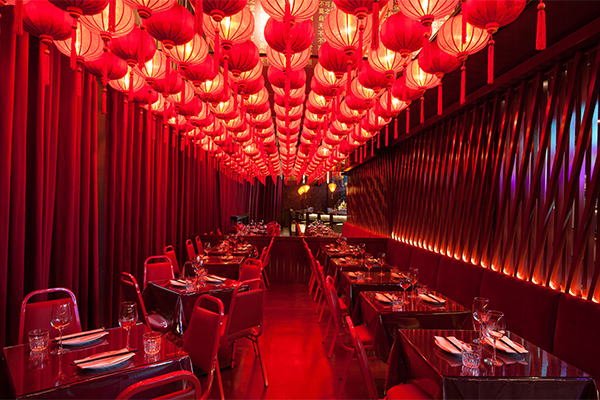
A red Asian themed restaurant.

2 – Organise Your Seating System

If you haven’t done this already, make sure you have an organized seating and reservation system. To do this, you will need to perfect communication between your waiters and hosts. A well-running system will have the waiter signal the runner to clear tables as soon as they pick up the bill and the host that their table will be opening shortly. This allows the host to seat customers almost immediately. If your host can get customers to their table sooner, you stand to improve your table turnover rate. The following tips also help to organise your seating system:

  • Pre-assign tables to guests waiting in line so that guests can be seated as soon as they open up.
  • Keep your waiting area close to the host’s stand so that he/she can easily find customers waiting in line when their tables open.
  • Reconsider your reservation policy. If you only accept walk-ins, you never have to deal with groups that don’t show up.
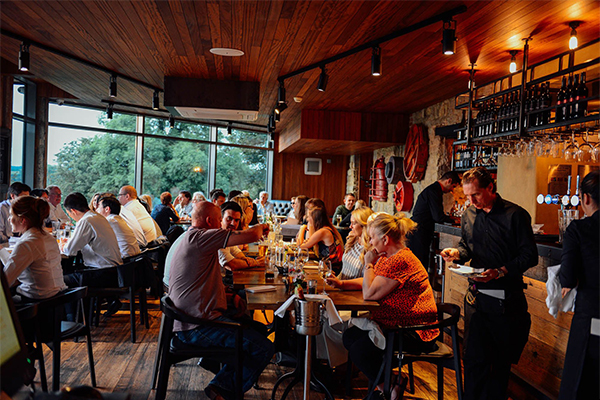
Organised seating plan in a restaurant.

3 – Don’t Wait On Waiters

Nothing aggravates diners more than having to wait on waiters. If your waiters don’t arrive at their tables immediately, they are adding to that table’s occupancy, slowing down your table turnover. For this reason, you must keep your serving staff on schedule by following the tips below:

  • Ensure servers arrive at their tables within minutes of seating guests.
  • The first question your waiters need to ask is “what brings you in today?” This allows them to tailor their service to the needs of the guests, expediting service.
  • Waiters must take drink orders immediately and bring out water as soon as possible.
  • If it’s a large group, consider assigning multiple servers and runners to the table to hasten service.
  • Runners shouldn’t wait for the guests to leave before clearing the table, rather they should begin the process as soon as guests finish their meals.
  • Prepare cutlery in advance so that tables can be reset quickly after service.
  • Waiters can place the check on the table before guests have asked for it to subtly signal them to leave. This can easily appear as rude, so time it wisely.
  • If you are dealing with “campers” who are still at their tables after paying, you can politely explain to them you have reservations waiting and ask them to continue their conversation at the bar.

Happy couple and a waiter.

4 – Keep it Short And Sweet

Many people still believe that a larger menu leads to more customer satisfaction because it gives your guests more options and allows them to make decisions easier; however, the converse is true. Guests actually experience a subtle form of anxiety when overloaded with choices, slowing down their decision making. It’s better to opt for a smaller menu, focusing on your best and most popular options so that guests can make faster decisions allowing you to turn their table faster. You will also avoid possible waste and save money by trimming your menu to only include your most popular meals.
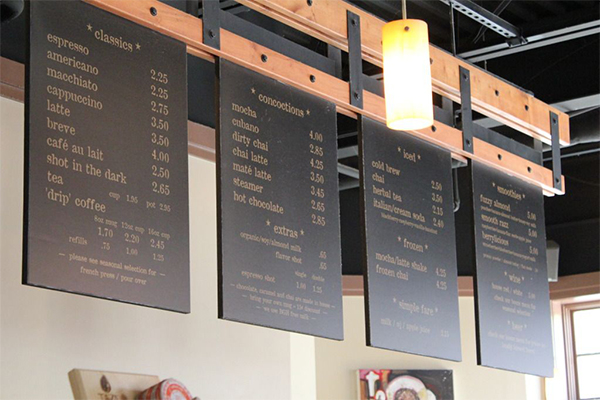
A short restaurant menu.

Maximising table turnover is a balancing act. There are several strategies you can employ to get diners service quicker and eating faster, however, there is a chance that these tricks can backfire and leave your guests feeling unappreciated and unwelcome. The key lies in practice and experimentation. Use our top tips as a guiding principle and modify them to meet the needs of your restaurant. This way, you’ll not only maximise turnover but you’ll also be maximising profit.

Posted on

COMMERCIAL BLENDERS BUYER’S GUIDE

Buying commercial blenders can be a huge chore if you don’t know what to look out for. With so many different options on the market like stick blenders, food blenders and bar blenders, you can easily choose the wrong appliance for your occupation. Trust us, using the right blender for your task can make or break your recipe and avoid a sticky mess and worse – irreparable machine damage. For this reason, we have put together a comprehensive commercial blender buyers guide so you can find all the relevant information you need to make the right choice.

Types of Blenders

To kick off our guide, we’ll first discuss the most commonly found commercial blenders on the market. If you’re wondering what the difference is between a food blender and a bar blender, you’ve come to the right place. All of your questions are answered below.

Food Blenders

Generally the toughest in the business, food blenders are made for high-volume use and can withstand the pressures of continuous use without overheating its machinery. This is a very important factor to consider if you’re in need of a blender for your restaurant, café or hotel. Thanks to their higher horse power, they can swiftly blend smoothies and milkshakes in seconds as well as hard foods like ice, nuts, vegetables and fruits.

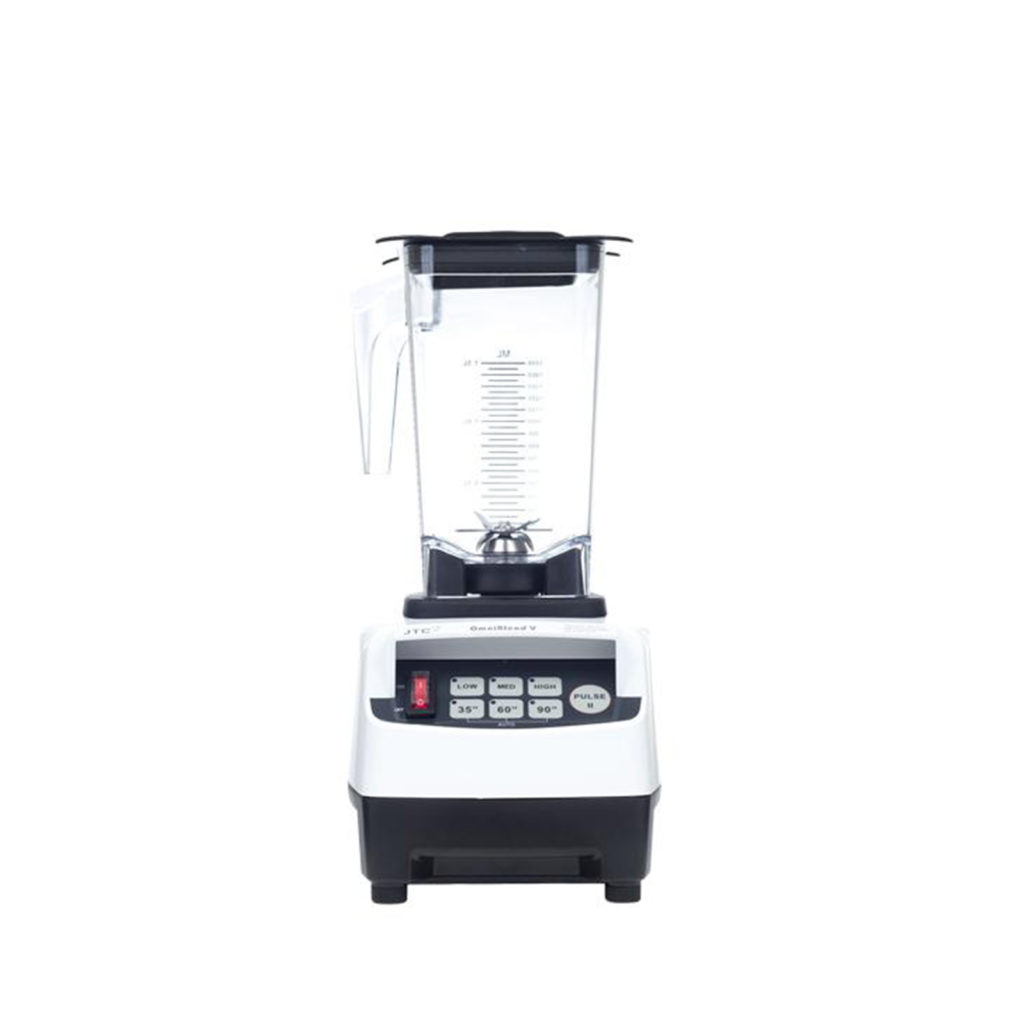
Omniblend V 1.5L in white.

OMNIBLEND V 1.5L
By OmniBlend

The OmniBlend III 2L in black.

OMNIBLEND III 2L
By OmniBlend

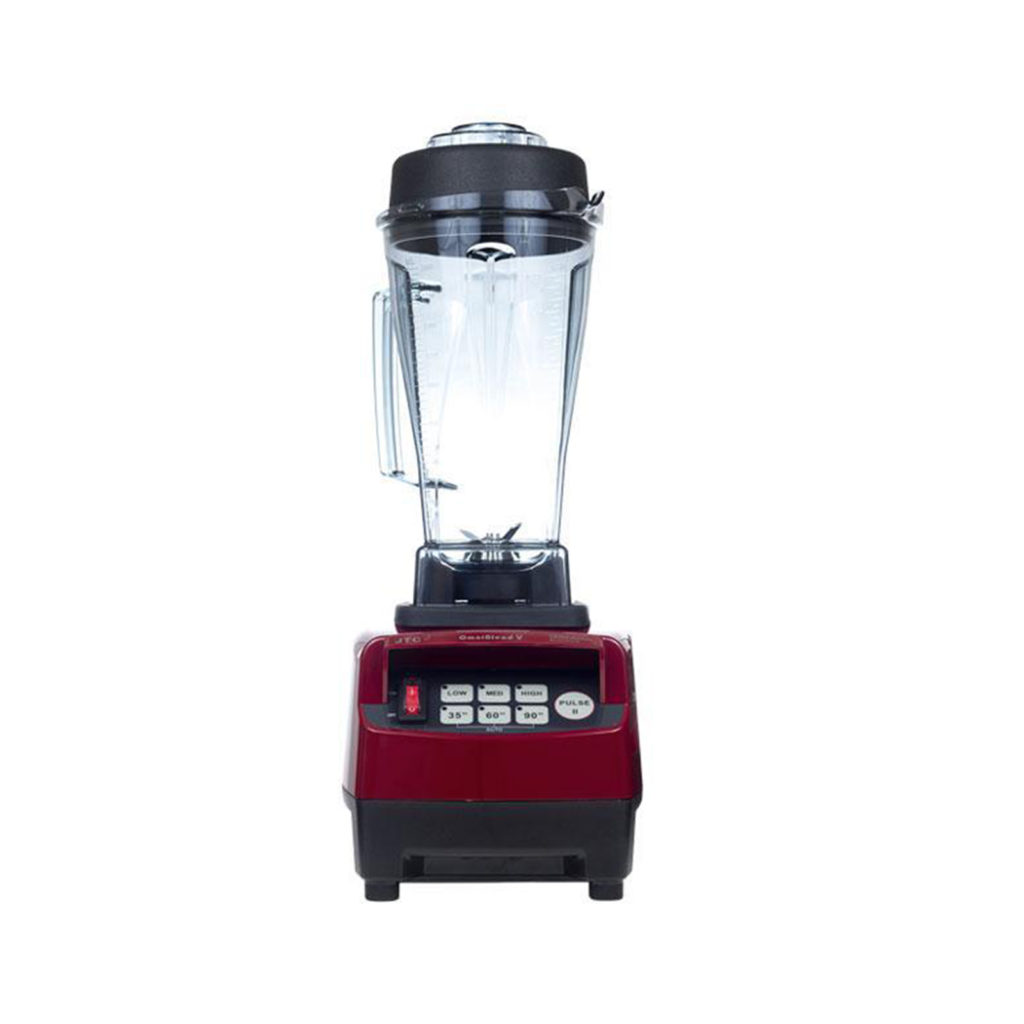
Omniblend V 2L in maroon.

OMNIBLEND V 2L
By OmniBlend

Bar Blenders

Bar blenders aren’t typically as tough as food blenders; however, you will find that even our lighter-duty models can handle the occasional smoothie or two with ease. That being said, these blenders are not made to withstand the rigours of blending hard foods and are instead designed for making margaritas, daiquiris and other signature cocktails.

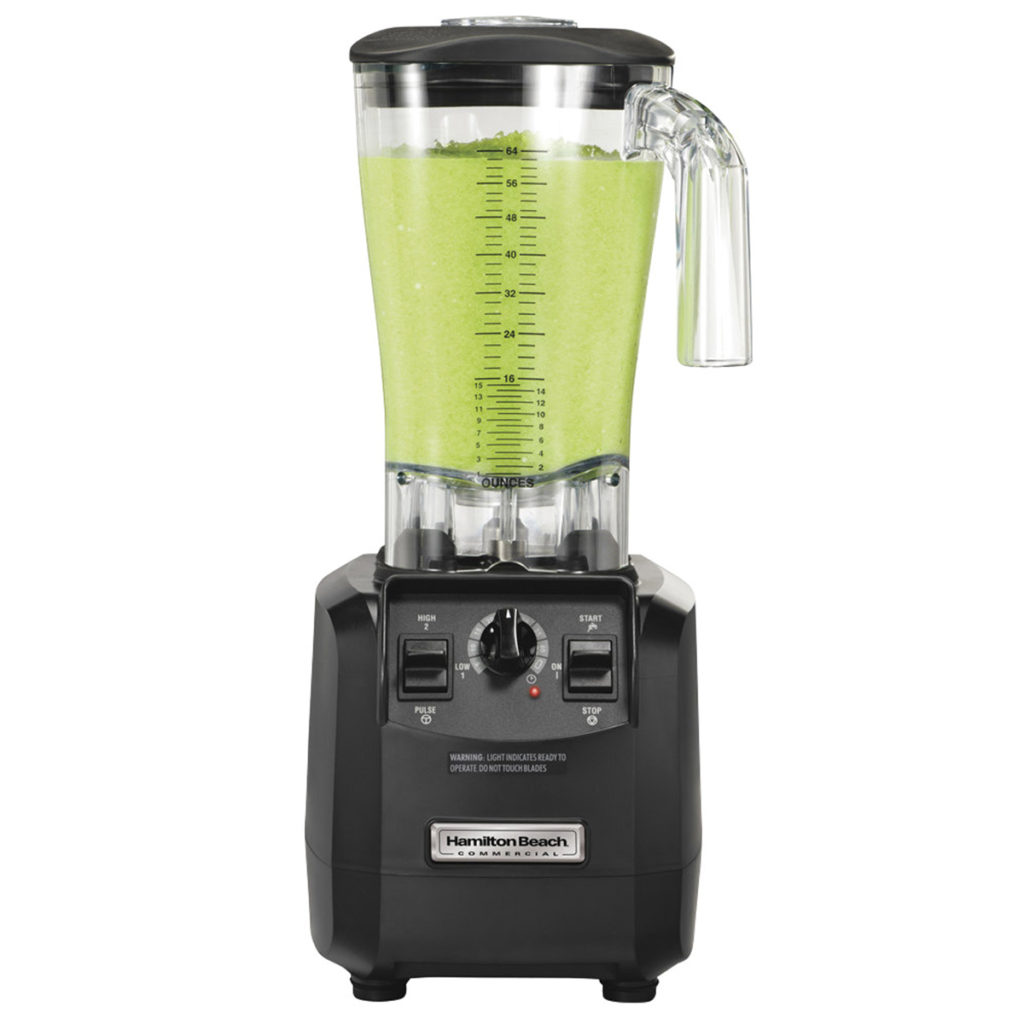
The Fury bar blender by Hamilton Beach.

FURY BAR BLENDER
By Hamilton Beach

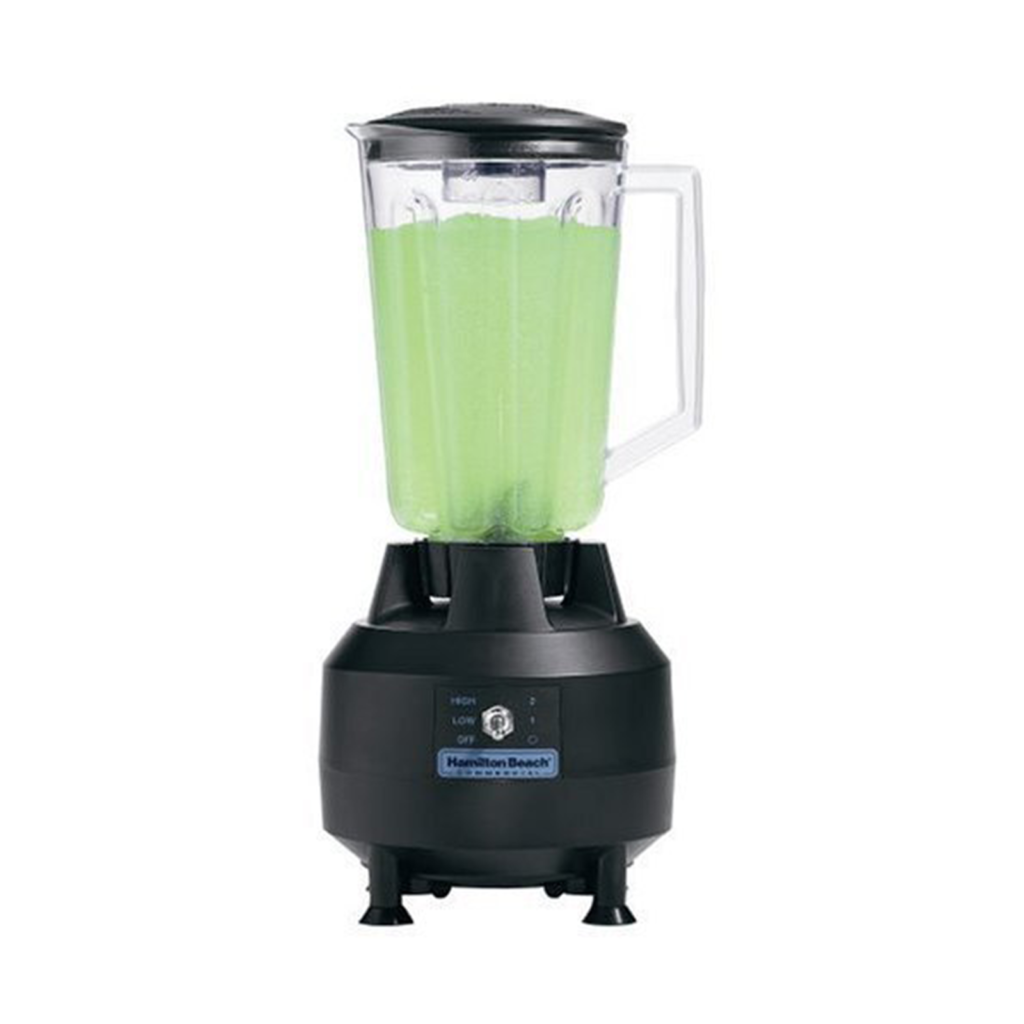
The 908 bar blender by Hamilton Beach.

908 BAR BLENDER
By Hamilton Beach

The Tango bar blender by Hamilton Beach.

TANGO BAR BLENDER
By Hamilton Beach

Stick Blenders

An immersion blender is a must-have for all kitchens. These hand-operated, easy-to-use blenders are versatile marvels and can be used for an array of kitchen tasks. Immersion blenders are the perfect tools for mashing potatoes, whipping cream, pureeing soups and sauces and even chopping soft foods. Some of these stick blenders even come with extra attachments, like emulsions disks, for greater versatility.

Food and bar blenders take up some space and it can be a burden finding a place for them in your kitchen; however, with an immersion blender, you don’t have any of these struggles because it conveniently fits into a drawer.

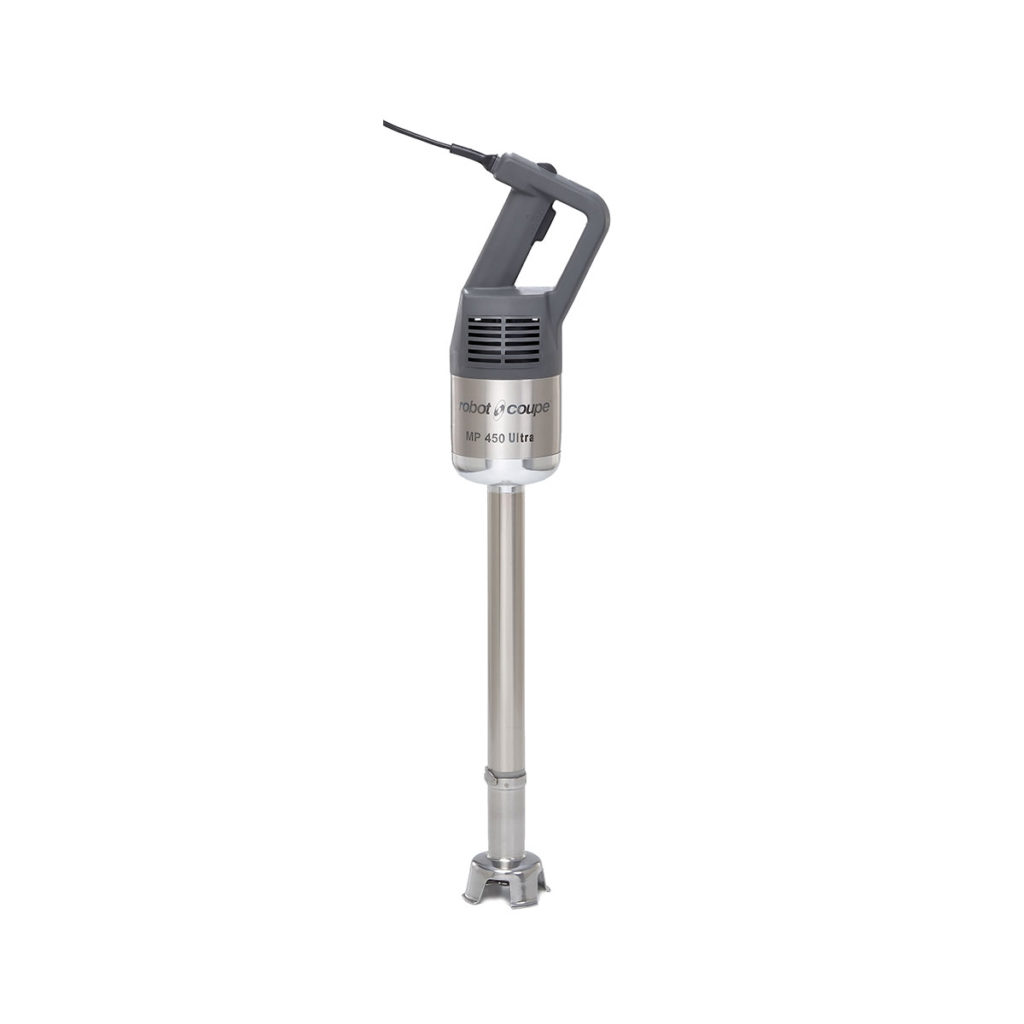
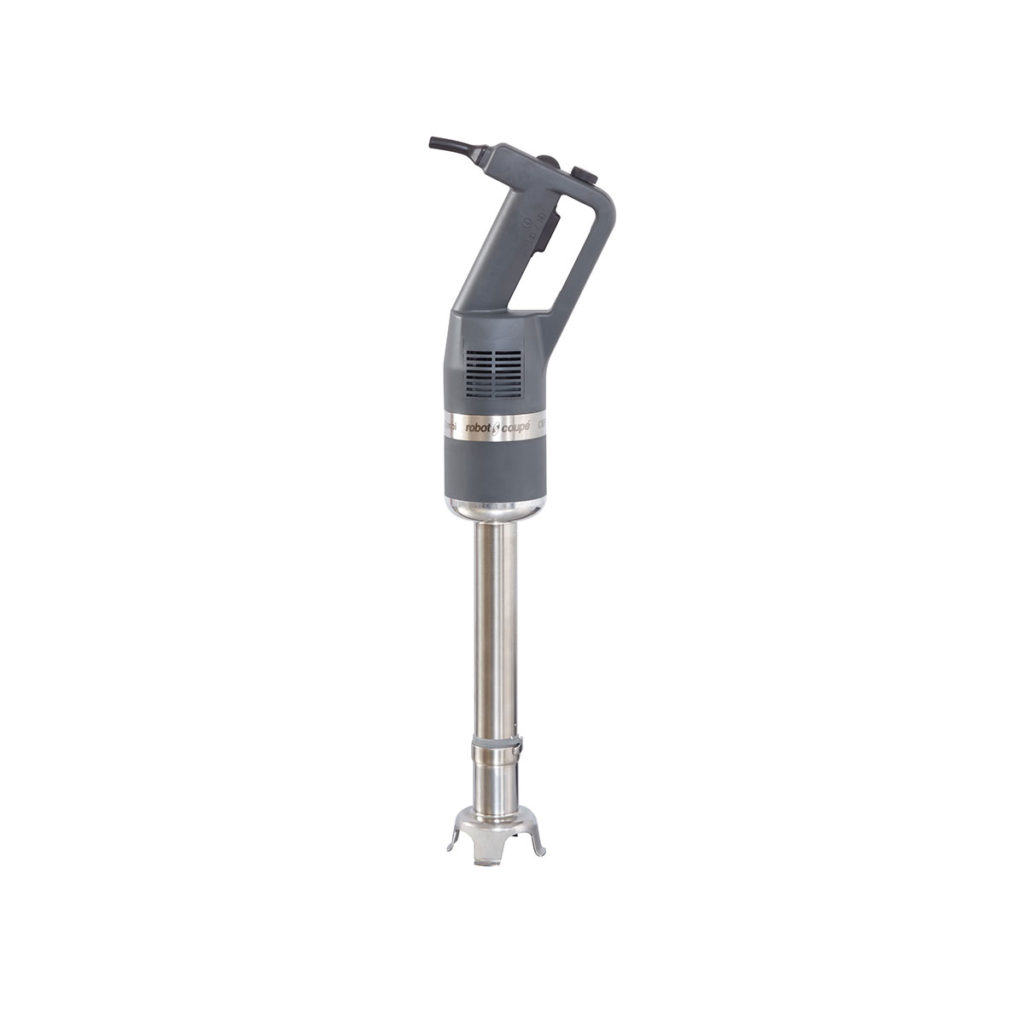
The large stick blender MP 450 by Robot Coupe.

STICK BLENDER MP 450
By Robot Coupe

The compact stick blender MP 300 by Robot Coupe.

STICK BLENDER MP 300
By Robot Coupe

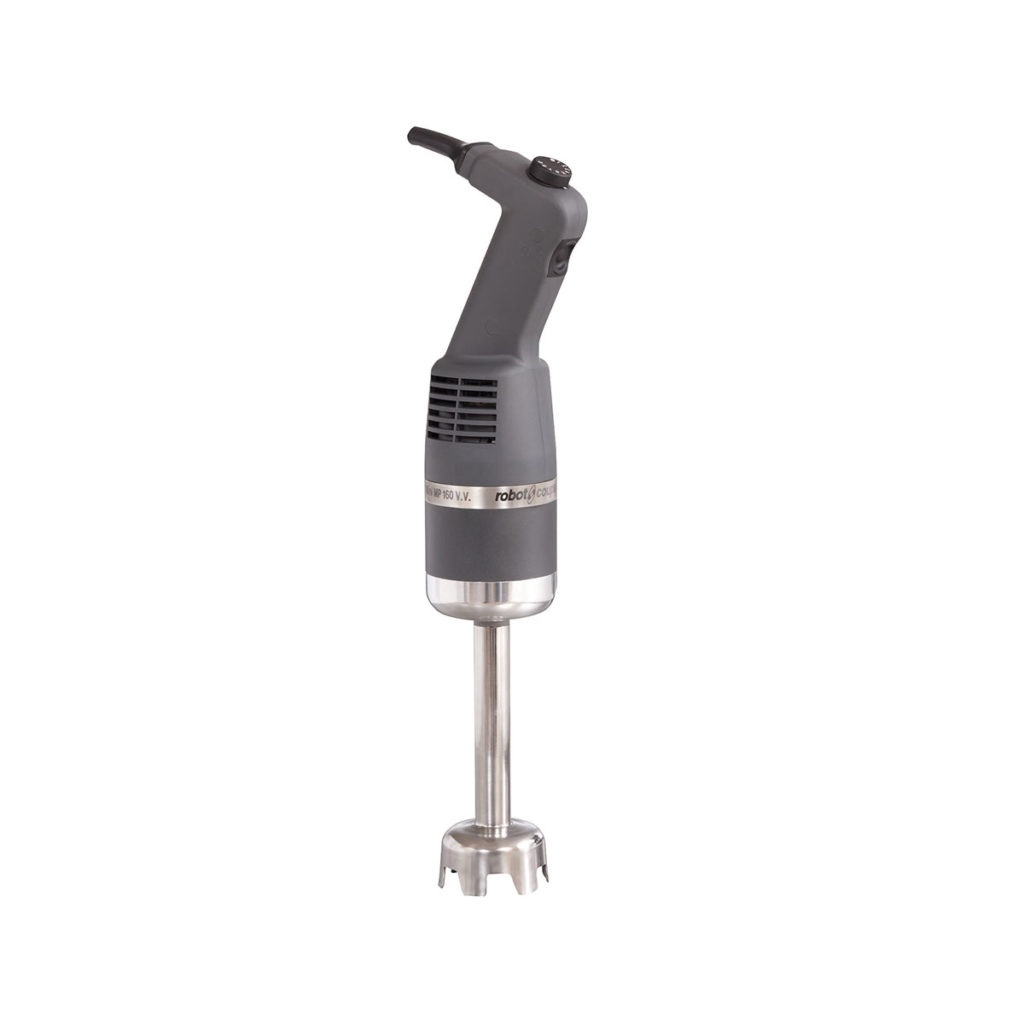
The mini stick blender MP 160 by Robot Coupe.

MINI STICK BLENDER MP 160
By Robot Coupe

What Makes A Commercial Blender The Best For You?

Now that you know more about the different types of commercial blenders on the market, you’ll need to assess your needs to find the best one for you. The first thing you need to do is think about the environment it will be used in. Consider what types of food you will be using the blender for as well as the frequency of use. For instance, if you will only be using the blender to make cocktails, make sure to choose a bar blender and if you expect that you will be using it throughout the day, opt for a heavier-duty model.

Commercial blenders come with several different features, designed to meet specific needs. For example, some blenders come with programmable controls, timers or paddle switches that free up hands for high-volume kitchens or bars. In these cases, it makes sense to choose a more advanced blender because you stand to save hours of time and labour. Below we discuss some of the larger factors you need to consider when choosing the best commercial blender for you.

Power Up

Check the specs of the product you’re looking at to find the correct level of horsepower for your operation. Though it may seem like a more powerful machine is your best option that truly isn’t always the case. The guiding principle here is application. If you are planning on using the appliance to make smoothies all day, you will have to choose one with more power; however, if you think you’ll only need to make a few cocktails per day, you can choose a smaller less powerful one. We suggest these ideal applications for common HP ratings.

  • ½ HP – designed for light food preparation of less than 50 uses per day
  • 1 – 1 ½ HP – designed for medium food preparation of less than 75 uses per day
  • 2 HP –  designed for medium to heavy food preparation of less than 100 uses per day
  • 3 ½ HP – designed for heavy food and beverage preparation of more than 100 uses per day

Curious About Controls

There are several different control options to choose from including paddle switches and programmable buttons that can help to make your life easier. Each of these versions has their own benefits and applications where they work best so it’s worth your time considering these different types of controls.

  • Toggle/Paddle Switch – simple and perfect for where you don’t need to be precise over blending speed and time. Usually less expensive but has limited abilities.
  • Electronic – if you need more control over your blending cycle this is a better option. Though they are more expensive, they do have more options.
  • Programmable – this option is useful if the same beverages or food products need to be blended repeatedly throughout the day.

Sounds Of Silence

Another often overlooked factor you need to consider is noise. Blenders are not the softest of instruments and can be a real disruption if placed in the wrong space. This is why we have noise covers for blenders that reduce sound. Your customers aren’t the only ones who will appreciate a more peaceful environment, your kitchen staff will also be more productive and comfortable with less ambient noise. So, if noise is a concern, make sure to invest in a blender with a sound enclosure.

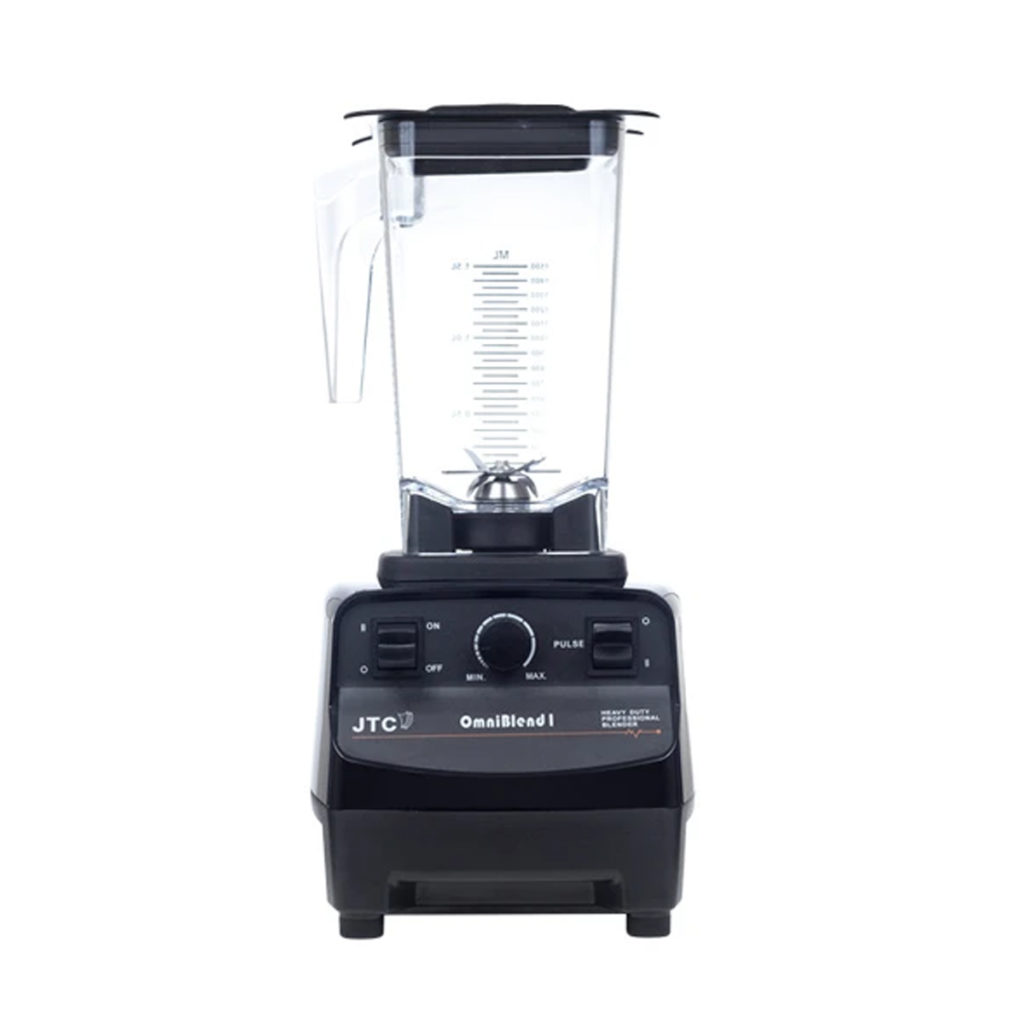
OMNIBLEND I 1.5L
By OmniBlend

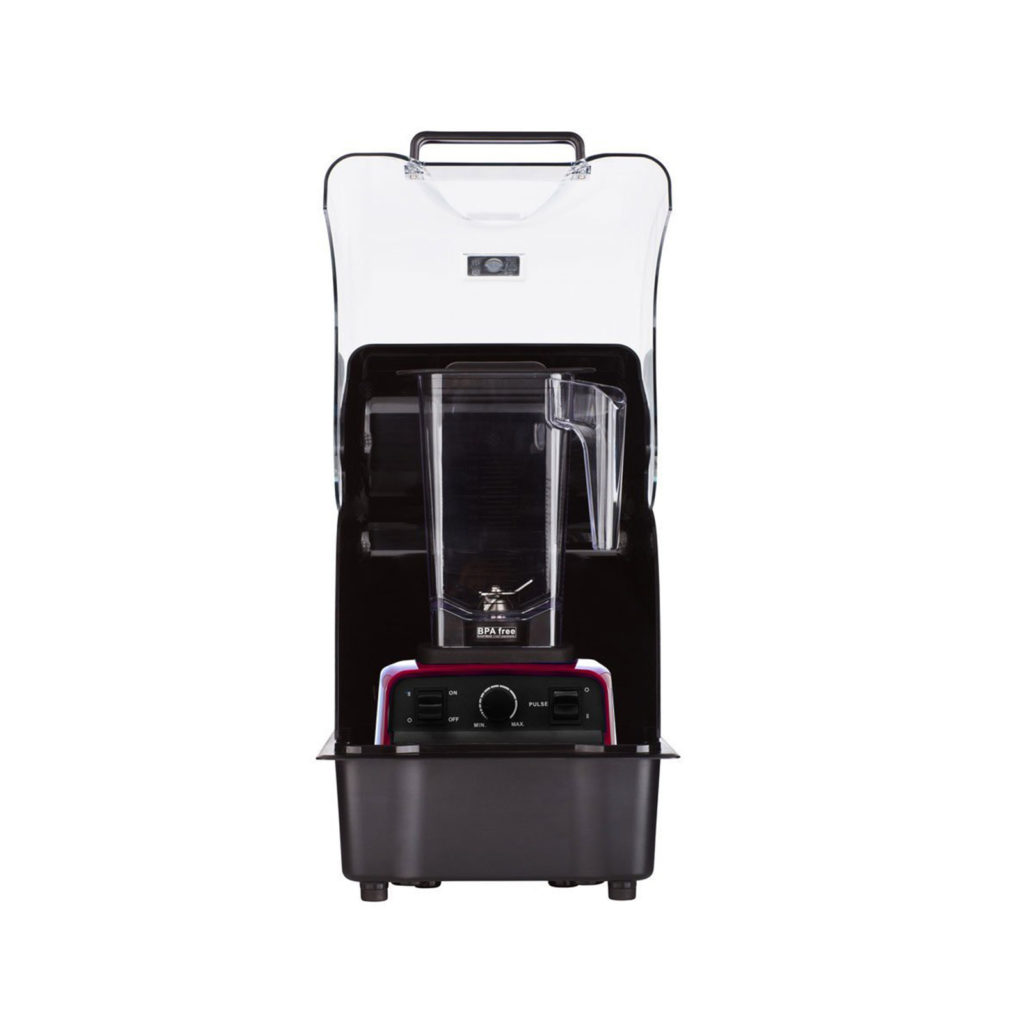
The Omniblend I 1.5L sound cover in maroon.

OMNIBLEND 1.5L SOUND COVER
By OmniBlend

Core Catering Supplies has a great collection of blenders from programmable food blenders to immersion stick blenders available for your consideration. Make sure to take your time going over all the specifications to find a blender for your planned application and if you need any help to find the best commercial blender for you, don’t hesitate to contact our experienced team.

Posted on

COMMERCIAL MIXER BUYING GUIDE

Choosing the right commercial mixer can be a difficult task. A versatile investment for any kitchen, mixers come with several useful attachments that can be customised to suit your particular needs. From belt drive systems to bowl guards, there are just so many different specs and features to consider when buying a commercial mixer.

We are here to make it easy for you. In this comprehensive guide, we dive deep into the differences between commercial mixers, their functions and sizes so that you can find the perfect mixer for you whether you’re a pizzeria mixing kilos of dough a day or a casual restaurant in need of just a few pastries a week. We also share several care and service tips you can follow to ensure the longevity of your mixer in the kitchen.

What Are The Different Types of Commercial Mixers?

There are many different types of commercial mixers on the market from light-duty to heavy-duty machines, all with specific uses, advantages and disadvantages. In general, you will find three types of mixers.

Planetary Mixers

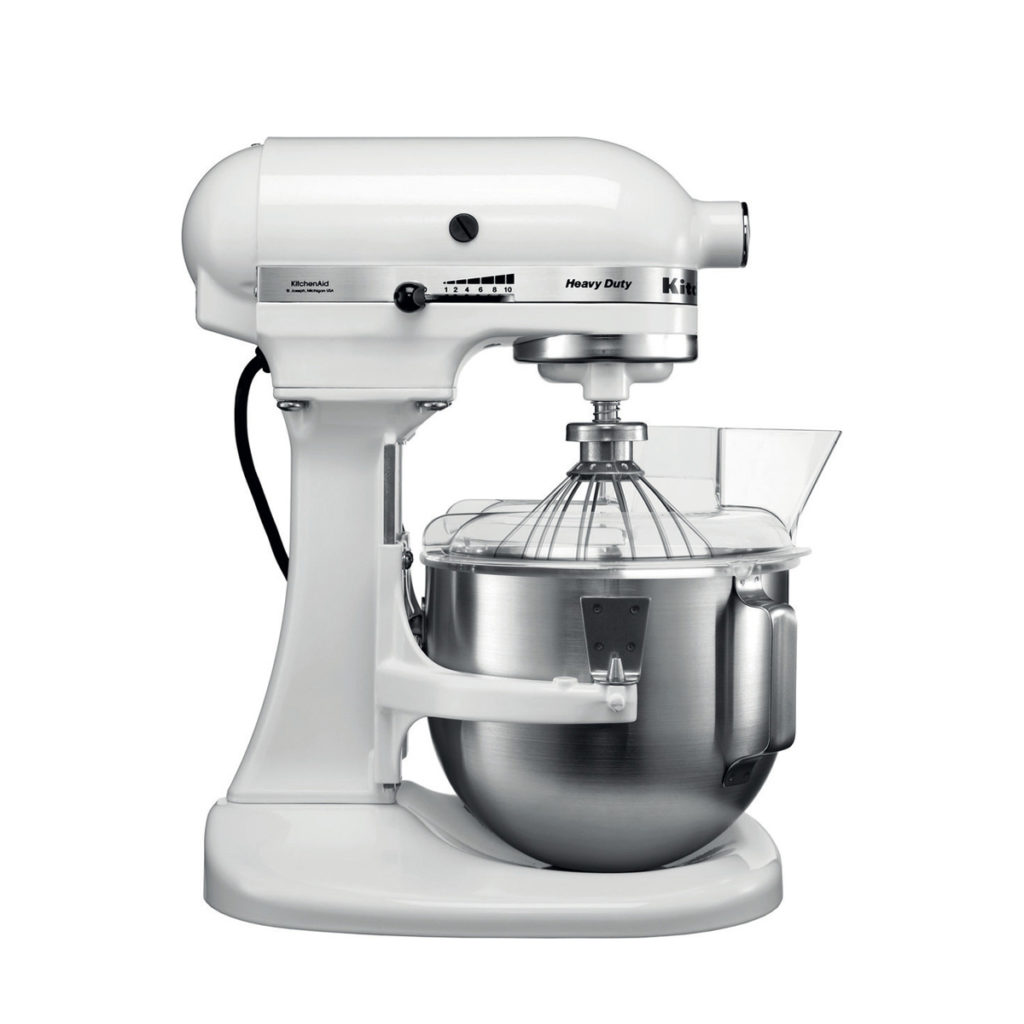
Planetary mixers, also known as vertical mixers, feature an agitator that turns on an offset shaft, while keeping the mixing bowl stationary. The agitator is typically interchangeable with various attachments you can customise to mix anything from dough to meringues. Planetary mixers are typically more compact and energy-efficient and they lower physical effort and labour in your kitchen.

The planetary mixer by KitchenAid.

PLANETARY MIXER
By KitchenAid

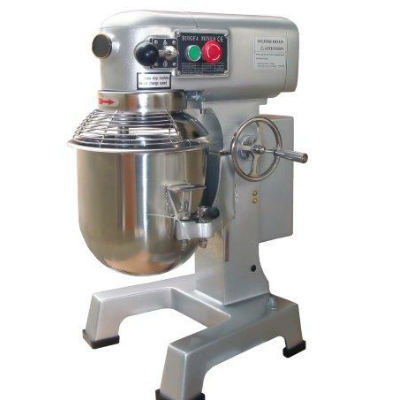
The dough mixer by Ankor.

PLANETARY DOUGH MIXER
By Ankor

Dough Mixers

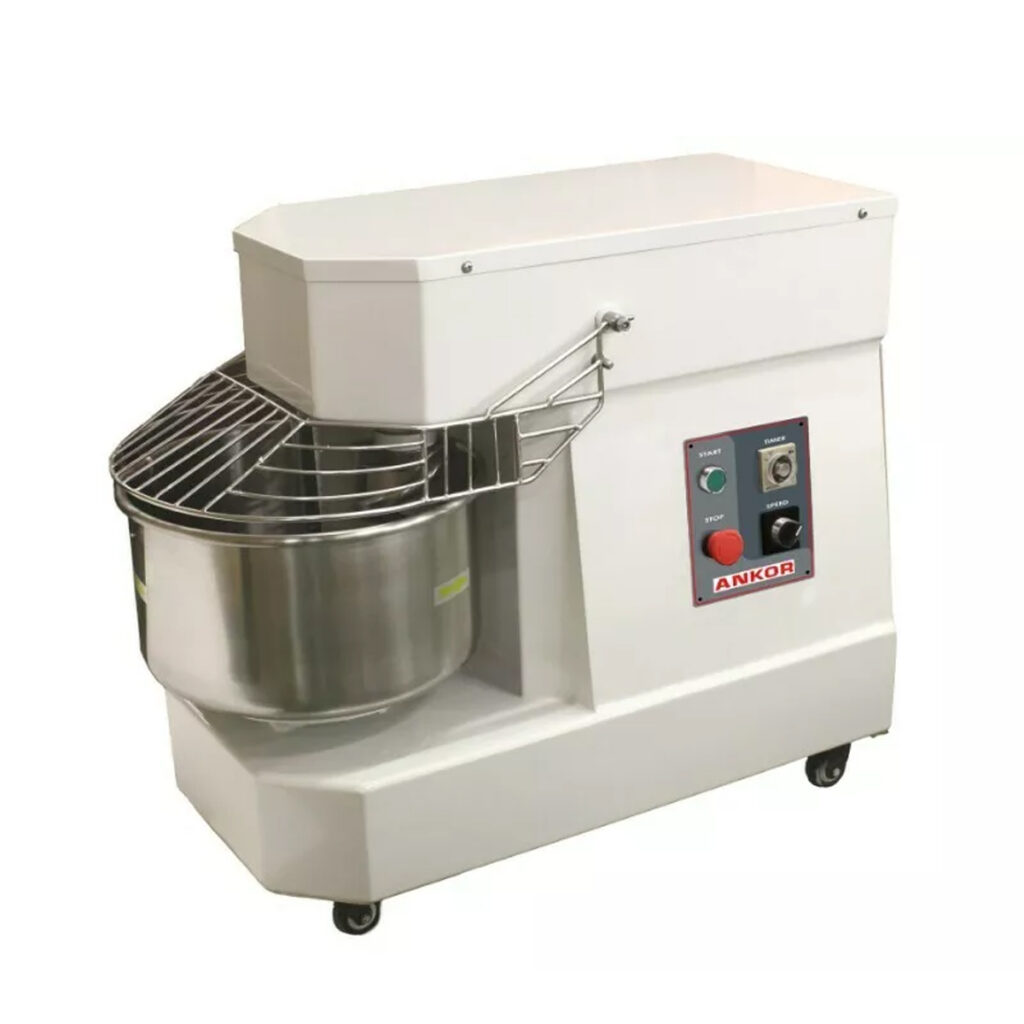
Dough mixers, also known as vertical mixers, feature a spiral-shaped agitator that remains stationary while the bowl revolves around it. This particular design makes these appliances great at mixing large quantities of dough at a time.

The spiral dough mixer by Ankor.

SPIRAL DOUGH MIXER
By Ankor

Hand Mixers

The hand mixer is your best option for lighter mixing tasks. The great advantage of these is their utility and ease of use. You can also use these versatile mixers as blenders to create pures and sauces that you can use for new and creative plating ideas. However, they are hand-operated, so you do not get the benefits of an automatic machine.

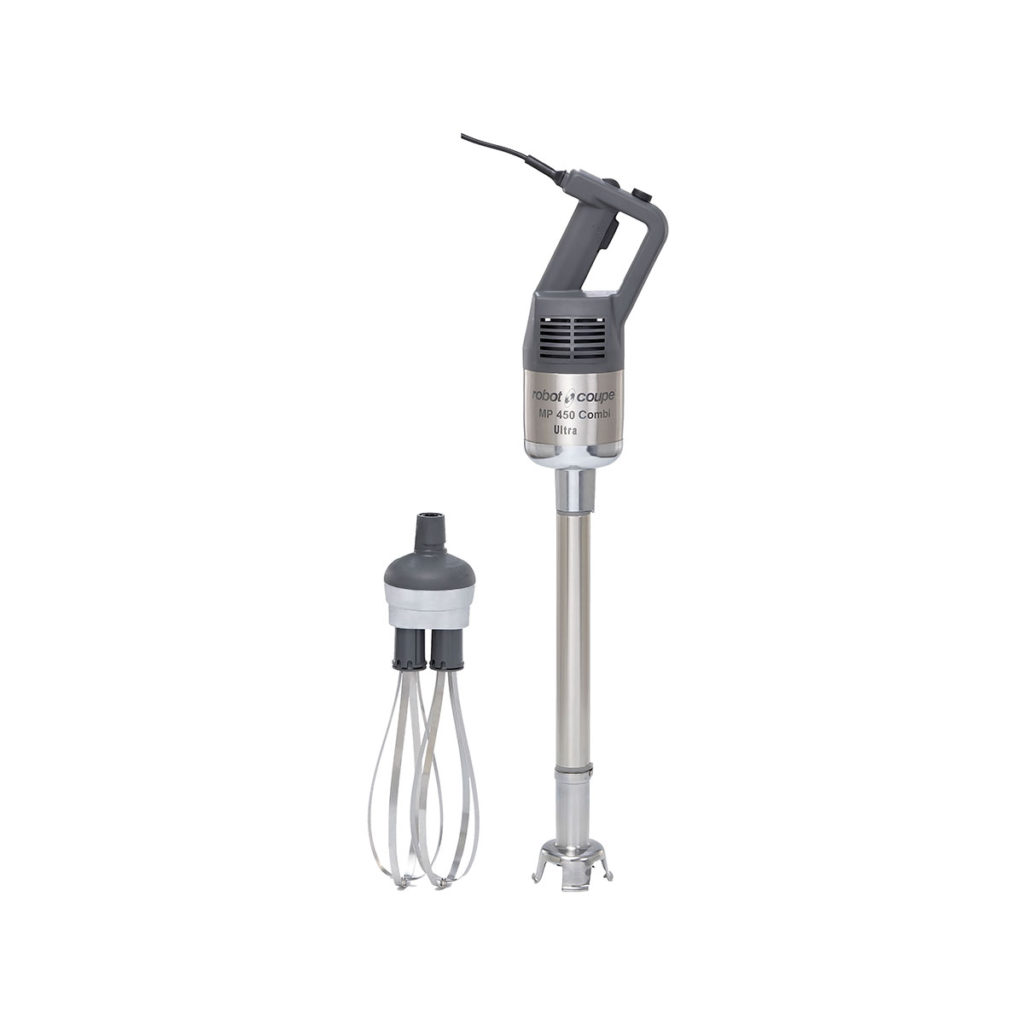
The large power combination mixer MP 450 by Robot Coupe.

LARGE POWER COMBINATION MIXER MP 450
By Robot Coupe

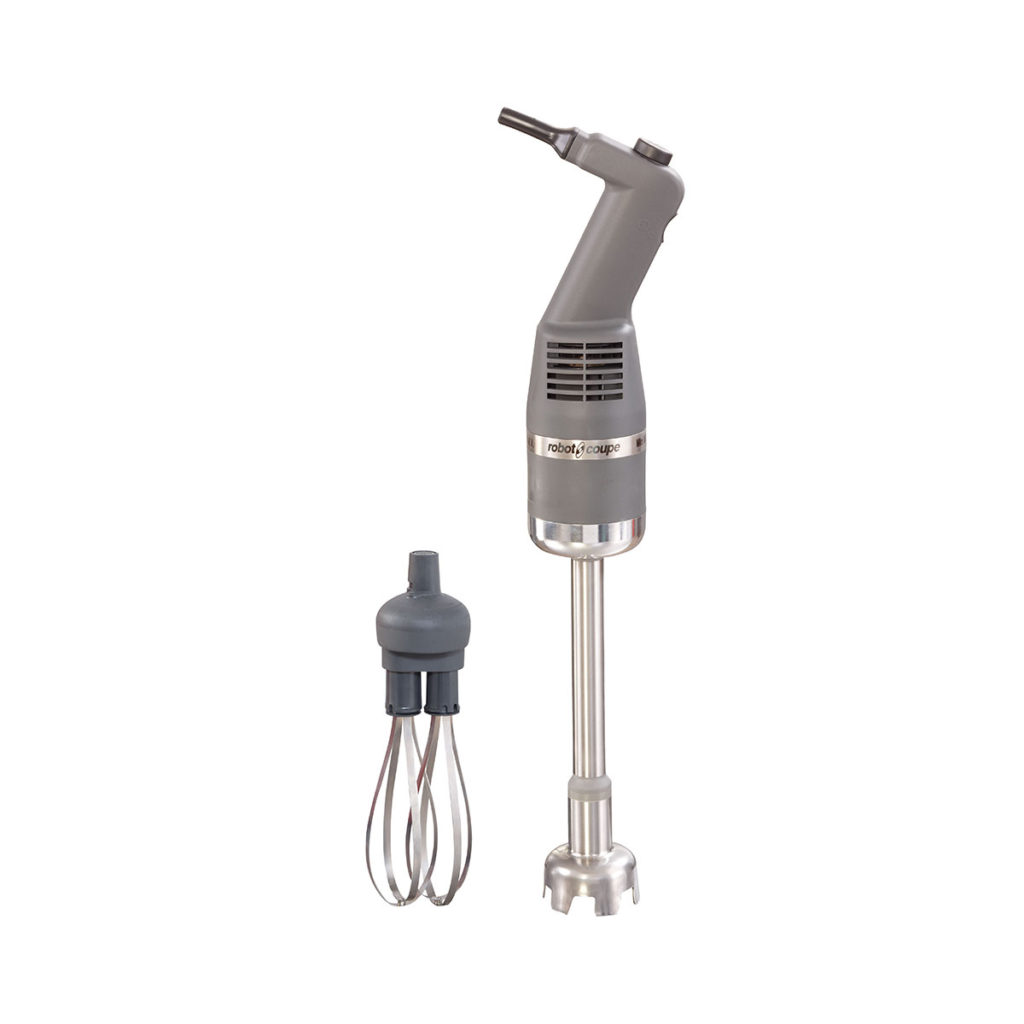
The mini power combination mixer mp 240 by Robot Coupe.

MINI POWER COMBINATION MIXER MP 240
By Robot Coupe

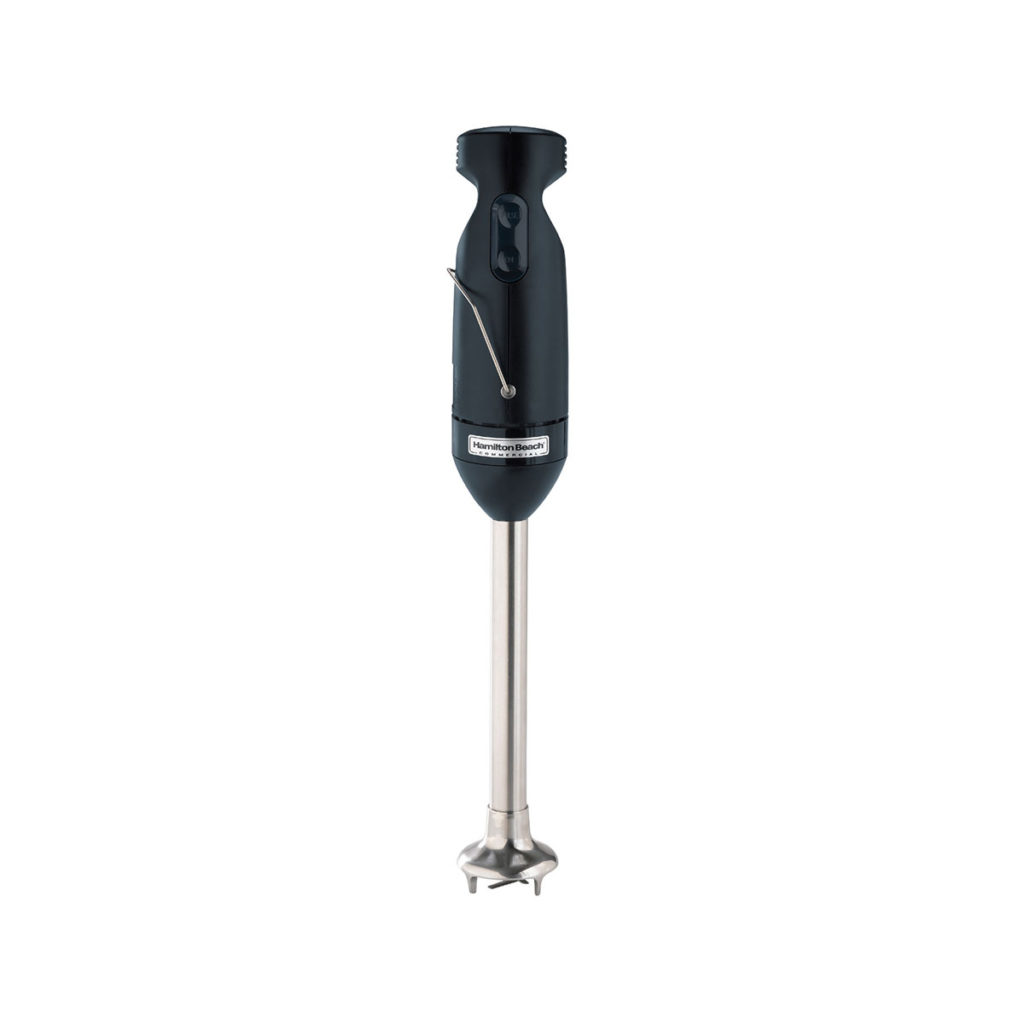
The hand held immersion mixer by Hamilton Beach

HANDHELD IMMERSION MIXER
By Hamilton Beach

Commercial Mixer Features

Before you choose your commercial mixer, you need to make sure it has the power and utility to meet your needs. The following features and specs should be taken into consideration when looking for a mixer.

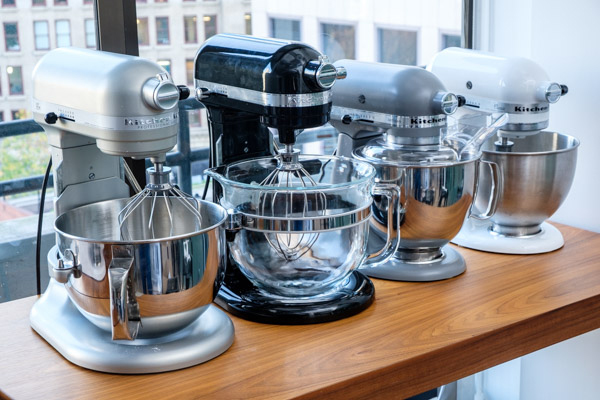
A group of KitchenAid mixers.

Size

Size is one of the most determining factors that must be taken into consideration when buying a commercial mixer. You need to determine how much product you want from the mixer as well as where it will be placed in the kitchen. Smaller countertop mixers (less than 10L), are made to fit on a countertop, whereas larger mixers (10-20L) mixers are best suited for a sturdy, equipment surface. Generally, anything larger is considered to be a floor mixer, designed to sit directly on the floor.

System

There are typically two types of gear systems, belt-driven or gear-driven. Both options are suitable for the rigors of commercial use, but there are benefits and disadvantages to both. Belt-driven systems can experience a belt slip which slows down the mixer, whereas gear-driven systems maintain a constant velocity. However, gear-driven systems can be very expensive to repair as opposed to the belt-driven option.

Speed

Mixers will typically feature multiple operating speeds that affect how quickly the agitator or bowl revolves. Consult the manual of your mixer to determine which speeds function best with your machine and how different agitators affect the velocity of your mix.

If you want a mixer that can change speeds during operation, make sure that it’s possible with the one you are looking at. Not all mixers are engineered to handle the mechanical stresses associated with changing speeds on the fly. You might need to first switch off your machine before making these adjustments otherwise you could cause severe internal damage to your machine.

Power

Larger mixers tend to have a stronger motor than smaller models because they are designed to mix more material at a time. This also allows larger mixers to handle thicker, stiffer dough which requires more power.

Bowl Guard

Often overlooked, but an essential commercial mixer feature is the bowl guard. This is the plastic or wire cover found around the top of the bowl. It prevents hands, clothing and other foreign objects from getting into contact with the agitator while it’s in use in order o protect whoever is operating the machine from injury.

The 2 Most Important Questions

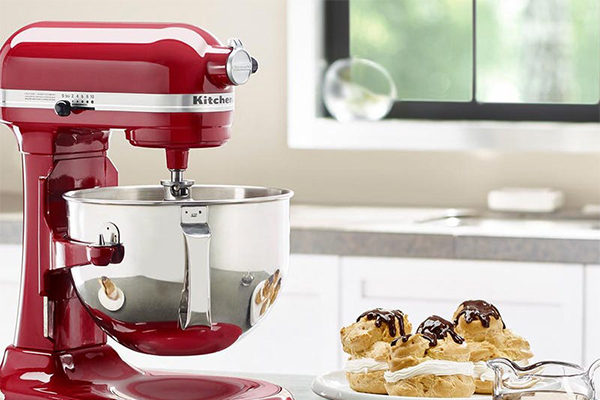
A kitchenaid mixer in a kitchen,

What Do You Need To Mix?

Different kinds of dough and batter have different consistencies and thus require a mixer that can handle them. A thick dough will require the use of a stronger machine, whereas lighter-duty mixers are more suitable for light consistencies like meringues. The absorption ratio of your most commonly used dough is a great guiding principle for the mixer you will need. The lower the absorption rate, the tougher the dough will be and the stronger mixer you will need. To calculate the absorption ratio simply divide the water weight of your mixture with its flour weight.

How Much Will You Be Mixing?

Next, you will need to ask yourself how often you’ll be using your mixer. It’s safe to say that most small restaurants can get away with a 5-20L planetary mixer; however, bakeries and pizzerias will probably need a 40L mixer or even a spiral mixer for seriously large scale operations.

To answer this question you will also have to remember that you can’t fill your mixer’s bowl to the brim and different ingredients have an effect on how big your batch can be, for instance, mixes with high flour protein content or more oil will have smaller batch sizes.

Caring For Your Commercial Mixer

Commercial mixers are generally robust in nature; however, they still require proper maintenance and care. Extend the lifetime of your mixer by following our top tips below:

  • Follow the guidelines for much product your mixture can handle
  • Remove and wash attachments and accessories after each use
  • Do not submerge your mixer in water
  • Turn off and unplug your mixer before cleaning
  • Clean the main part of your mixer with a damp cloth and sanitiser after each use or at the end of the day
  • Do not leave your mixer completely unattended when in use
  • Minimise breaking by using a food-grade machine oil on the attachment shaft
  • Do not change gears while the mixer is in use unless it has this feature
  • Depending on use, have service agents perform regular oil changes and tech checks every 6-12 months

Still not sure which commercial mixer is best for you? Core Catering Supplies has the product you are looking for. Browse our selection of premium-quality mixers online or speak to one of our sales agents for more information about the right mixer for you. Our team has extensive product knowledge and is always ready to assist you with any questions and information you may need even after making your purchase.

Posted on

How to Clean Cast Iron Cookware

Purchasing, receiving or inheriting cast iron cookware comes with great responsibility — proper care. Thankfully, there are various methods you can follow to clean cast iron cookware properly including the traditional salt method and the controversial soap method. It’s important that you find one that works best for you because, if properly taken care of, cast iron cookware can last several lifetimes and be passed on from generation to generation. The best part of proper care is that the longer your cast iron pot or pan has been in use and the more often it’s been reseasoned, the more delicious flavour you get out of it. In this guide, we discuss several methods at great length as well as how to reseason your cast iron products.

What is Cast Iron Cookware?

Cast iron cookware has been used for centuries by people from around the world. Seeing as these pots, pans, kettles, skillets and dishes are made from 97-99% iron (a commonly found material), they were and continue to be some of the most popular cookware choices. Cast iron is also exceptionally durable and, with the right care, can last for generations.

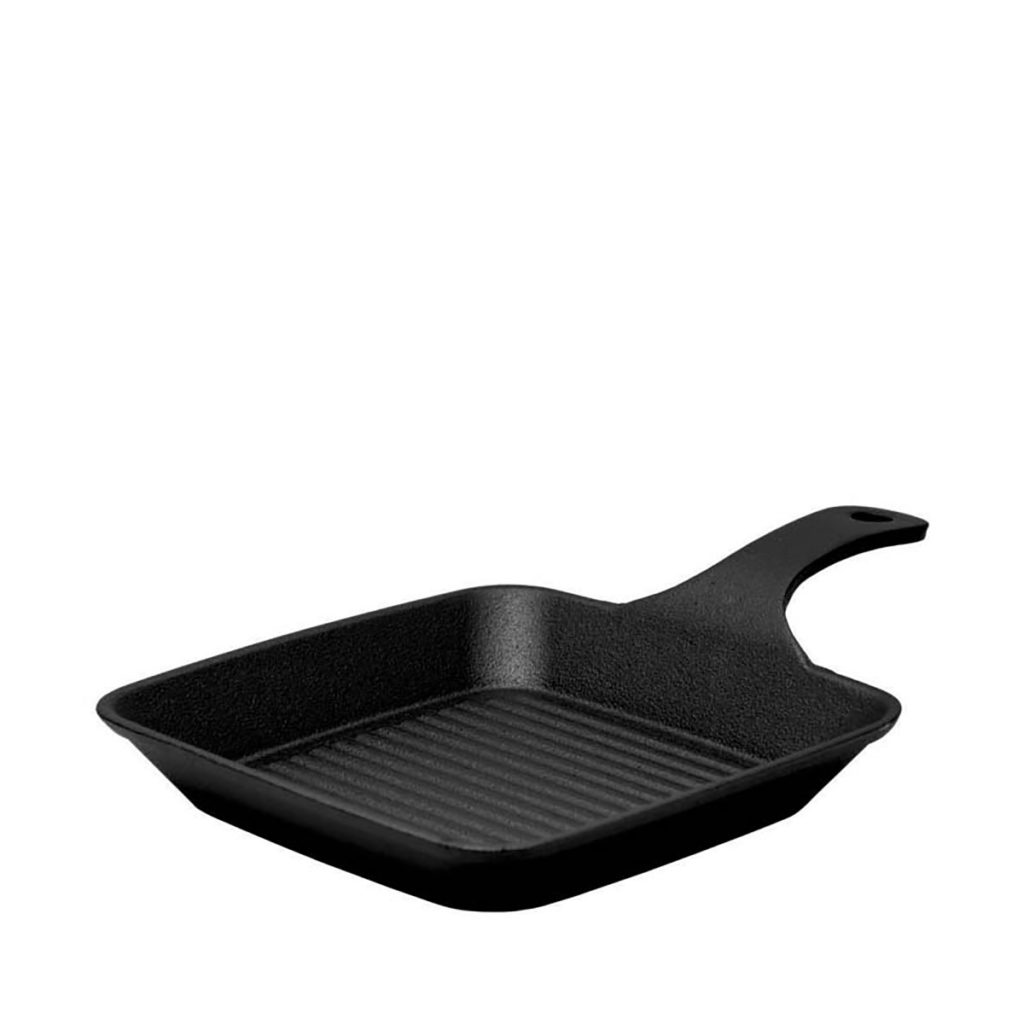
CAST IRON GRILL PAN
By Regent

CAST IRON HOT POT
By Regent

SMALL CAST IRON POT
By Regent

How to Clean Cast Iron Cookware

Here are a few methods you can follow to clean cast iron cookware properly. Read on to discover how to keep your pot and pans in a good condition for years to come.

Boiling Water

If your cookware has a lot of food particles stuck to it, this method may be your best bet. Just make sure whatever you are planning to wash has enough depth to hold water.

  1. Put the item you want to wash on the stove, fill with some water and bring to the boil.
  2. After a few minutes, the food particles should begin to float to the surface.
  3. Use an appropriate kitchen utensil, like a spatula, and scrape off the extra-clingy food particles.
  4. Allow the water to cool and throw it down the drain along with the food residue
  5. Rinse out the cookware with hot water
  6. Use dry paper towel to wipe away any remaining dirt.

Salt and Water

Salt methods are typically pro chefs’ preferred choice seeing as salt is used to keep the surface of the cast iron cookware smooth and seasoned. Kosher salt is particularly coarse and thus acts as an abrasive cleaning solution for stuck-on food particles.

  1. Cooldown the cookware but not completely.
  2. Cover the surface with a generous helping of coarse kosher salt.
  3. Add just a small amount of hot water to the surface so that the salt forms a paste-like texture
  4. Use a sponge to scrape all around the cookware.
  5. Rinse with hot water to remove all salt and food particles. Repeat if necessary.

Salt Without Water

Some people believe cast iron cookware should never come into contact with water and thus prefer this method to keep their precious pots and pans clean.

  1. Cover the surface of the cookware with a generous helping of coarse kosher salt.
  2. Use a paper towel to rub the salt into the stuck-on food particles.
  3. Add more salt and continue to scrub.
  4. Once satisfied with the results, use a paper towel to wipe off all residue and dump contents into the trash.

Soap and Water

In some circles, washing cast iron cookware with soap is seen as sacrilege because soap can potentially remove the flavour-enhancing seasoning layer of your pot or pan. However, if you follow this method correctly, it can be an excellent way to clean new cookware and remove rust.

  1. Put a tiny amount of non-abrasive soap or detergent in the middle of your cookware.
  2. Add a small amount of hot water and scrub the surface with steel wool, a scrubber or sponge.
  3. Rinse with hot water.
  4. Use a sponge or non-abrasive pan and scrub once more with soap.
  5. Rinse again.  

How to Reseason Cast Iron Cookware

Though keeping your cast iron cookware clean is important, what you do afterward is what really determines its longevity. After you have cleaned your pots and pans make sure to rid them of all moisture and reseason their surface.

Cast iron can easily rust so make sure it is bone dry before storing it away. We recommend you set your pots and pans on the stove or in the oven at 230-260°C to ensure that all water is evaporated. Once the moisture has been removed, take a paper towel and rub a neutral oil or shortening over the entire pot or pan. Then, take another paper towel and wipe away the excess oil. Place the pot or pan on the stove until it begins to smoke.

Care Tips

Follow these care tips to increase the life of your cast iron cookware.

  • Make sure it’s always bone dry before storing. If you leave water in the pot or if you soak it, it can rust.
  • Avoid warping by cooling the pot or pan before you bring it into contact with cold water.
  • Always wipe away excess oil when seasoning otherwise it will be left with a sticky surface.
  • Store without a lid as it can trap moisture inside the pot or pan.
  • If you are cleaning the pot or pan in a sink, line it with towels to prevent the bottom from scratching.
  • If you use an oven to reseason your pot or pan, make sure it is as hot as possible because it must go past smoking point to smoothly bond with the surface.
  • When using the oven, place your cookware upside down and place foil underneath to catch any oil that might drip off during the process.
Posted on

HOW TO CREATE THE PERFECT WINE LIST

HOW TO CREATE THE PERFECT WINE LIST

There are two aims when it comes to setting up a restaurant wine list – profit and enjoyability. You want to create a list of wines that your guests will want to order while simultaneously granting you the maximum amount of profit. To do this try these industry insider Core Tips:
Find The Right Flavour Profile

The most important strategy to follow is to match the theme of your food menu with your wine menu. Make sure to compile a list of wines that complement the food you serve, for example, steakhouses should have lots of bold, full-bodied, high-tannin red wines and less floral whites while Asian restaurants will be well off offering a selection of more delicate, spice and fruit-filled wines that counteract the heat.
There are so many different cultivars on the market with diverse flavour profiles that it can be difficult to find a selection that best fits your menu. The flavour and mouthfeel of the wine irrespective of its cultivar can vary based on a number of important factors, for example, higher sugar content results in a wine with a sweeter flavour, whereas high tannin levels make wine feel more dry or bitter in the mouth. So to make it easier we have listed commonly found cultivars and the food they pair well with below.

  • Cabernet Sauvignon – poultry and red meat
  • Shiraz – vegetables and red meat
  • Merlot –  fish, vegetables and red meat
  • Malbec – Mexican, spicy food and red meat
  • Pinot Noir – grains, mushrooms and poultry
  • Chardonnay – poultry and shellfish
  • Sauvignon Blanc – vegetables, seafood and Greek
  • Riesling – fruit, vegetables and Asian

In order to create a well-varied wine list, you’ll need to consider the following factors and profiles commonly used to describe the flavour of wine.

  • Sweetness – when creating a wine pairing, always make sure the wine is as least as sweet as the food. Dry, semi-dry, semi-sweet and sweet are the descriptive words you can use to denote the level of sweetness in the wine.
  • Acidity – more acidic wines are better at cleansing your palate, which makes them ideal for pairing with rich, creamy dishes.
  • Complexity – wines with complex flavours should be paired with simpler food and vice versa.
  • Alcohol content – salty and spicy food is best paired with wines with a lower alcohol content.
  • Oak influence – the more oaky the wine, the better it will pair with robust, smoky flavours.

Build The Brand

Restaurateurs often put all their attention on their food menu leaving their wine list as an afterthought. This is a big mistake because your wine list is just as much an extension of your establishment’s brand. Wine carries a rich history and is made with intense labour so with the right selection of wines you can augment the theme of your restaurant and help to tell its story.

For instance, if your restaurant is located on the Western Cape wine route, it makes sense to only use wines from the region. Chances are many of your patrons are coming to the region for tourism and would really appreciate a fully-immersive experience. Similarly, if your restaurant is focused on organic food and produce, it would be a great idea to only sell organic wine.

Knowledge Is Key

Even if your wine menu is neatly laid out with comprehensive but concise information, chances are it can still be confusing for your customers. In general, people don’t know that much about wine and they also don’t like reading so, how do you get them to make a purchase they’ll enjoy? The answer is knowledgeable staff.

It pays to give your service staff training about all aspects of your restaurant including your wine list. If your staff can give your patrons, well-educated recommendations when they place their drinks order, chances are they might even go for a more adventurous or expensive bottle. Some restaurants even do away with the menu entirely and have their bartenders or waitrons interview patrons about the kind of wines and flavours they have enjoyed before in order to make tailor-made suggestions, leaving every patron feeling special and particularly looked after.   

The Perfect Price Points

When it comes to pricing the general rule of thumb is a markup of 2 to 3 times the actual bottle cost. This means a R50 bottle of wine should go for about R100 to R150, which is the average price people expect to pay when dining out. However, what should you do with your more expensive offerings? Certainly, it would be quite difficult to sell a R150 bottle of wine for R450 even for patrons who are better off in the pocket. The answer is price margins.

If you are determined to sell more expensive options, you can play around with the price margins of your entire wine list. For instance, you can make your cheaper wines a little bit more expensive so that you can offer your more expensive wines at a slightly cheaper price point. This way your cheaper wines subsidise your more expensive options securing you a good profit on either option.

Playing around with price margins is a balancing act and you need to make sure that doesn’t seem obvious on your menu. Nothing will turn your customers more off than seeing a wine list where all the wines have clearly been marked up beyond the 2 to 3 times markup. You can get around this conundrum by offering a selection of wines that are not commonly found elsewhere so that your guests can compare your prices with your competitor, allowing you to get away with larger margin adjustments.

The Do’s And Don’ts Of Designing a Wine List

Once you have decided which wines you will be serving, take a strategic approach to listing them on your menu so that you can benefit from maximum profitability:

Do not organise wine by price. People too easily assume that price and quality go hand-in-hand when it’s not really the case when it comes to wine. Mixing them up will force your guests to go over the list in more detail to find what they are looking for instead of just opting for the cheapest or most expensive bottle.

Make your menu easy to read by keeping the list simple and providing important information like vintage, country of origin, body, and price per glass or bottle.

Arrange it in an order that makes logical sense such as dry to sweet, by geographical origin, or body of the wine.

Highlight specially selected mid- to high-priced wines on the menu to upsell or showcase.

Suggest food and wine pairings on menu items.

Keep your wines rotating seasonally to keep it from becoming too stale or boring. This can also help with stock keep as people are more likely to order white wines and rosés during the summer and red wines during winter.

Posted on

CAREERS

Is it you we’re looking for?

As South Africa’s leading catering suppliers, we have fuelled the expansion of South Africa’s hospitality industry for over 21 years. We are growing exponentially, which is why we are looking for fresh faces to help us reach new heights. From sales staff to digital marketers, we are looking for you.

Want to be part of our team? We coredially invite you to apply.